Looking for free variable fonts that actually work in UI? A practical list of the best variable fonts for product, web, and interface design in 2026.
Variable fonts didn’t arrive with much noise.
They didn’t replace anything overnight. They just slowly became useful.
Instead of loading multiple font files for different weights and styles, a variable font gives you continuous control inside a single file. Less payload, fewer compromises, and more consistency across real interfaces.
If you design products, dashboards, SaaS tools, or web interfaces, this matters more than it sounds. Typography decisions show up everywhere in UI, especially at small sizes and across breakpoints.
This list focuses on free variable fonts that actually hold up in production UI, not display typefaces and not typographic experiments. Every font here was chosen because it behaves well in real interfaces.
What actually makes a font “variable”?
Most designers are used to fonts with fixed weights:
Regular, Medium, Bold.
A variable font works differently.
A simple example
You’re designing a button label.
With a regular font:
- 400 feels slightly too light
- 500 feels slightly too heavy
- You have to pick one
With a variable font:
- You can use 450
- Or 480
- Exactly where it feels right
Same font. Same layout.
A very different level of control.
That’s the difference between having many weights and having a continuous typographic range.
Why variable fonts work so well for UI
Variable fonts aren’t about visual tricks.
They’re about stability.
They become especially useful when:
- You design responsive layouts
- You need several weights without loading several files
- You work with design systems or shared components
- Performance and consistency matter
In good UI, typography doesn’t draw attention to itself. It just stays out of the way.
Inter
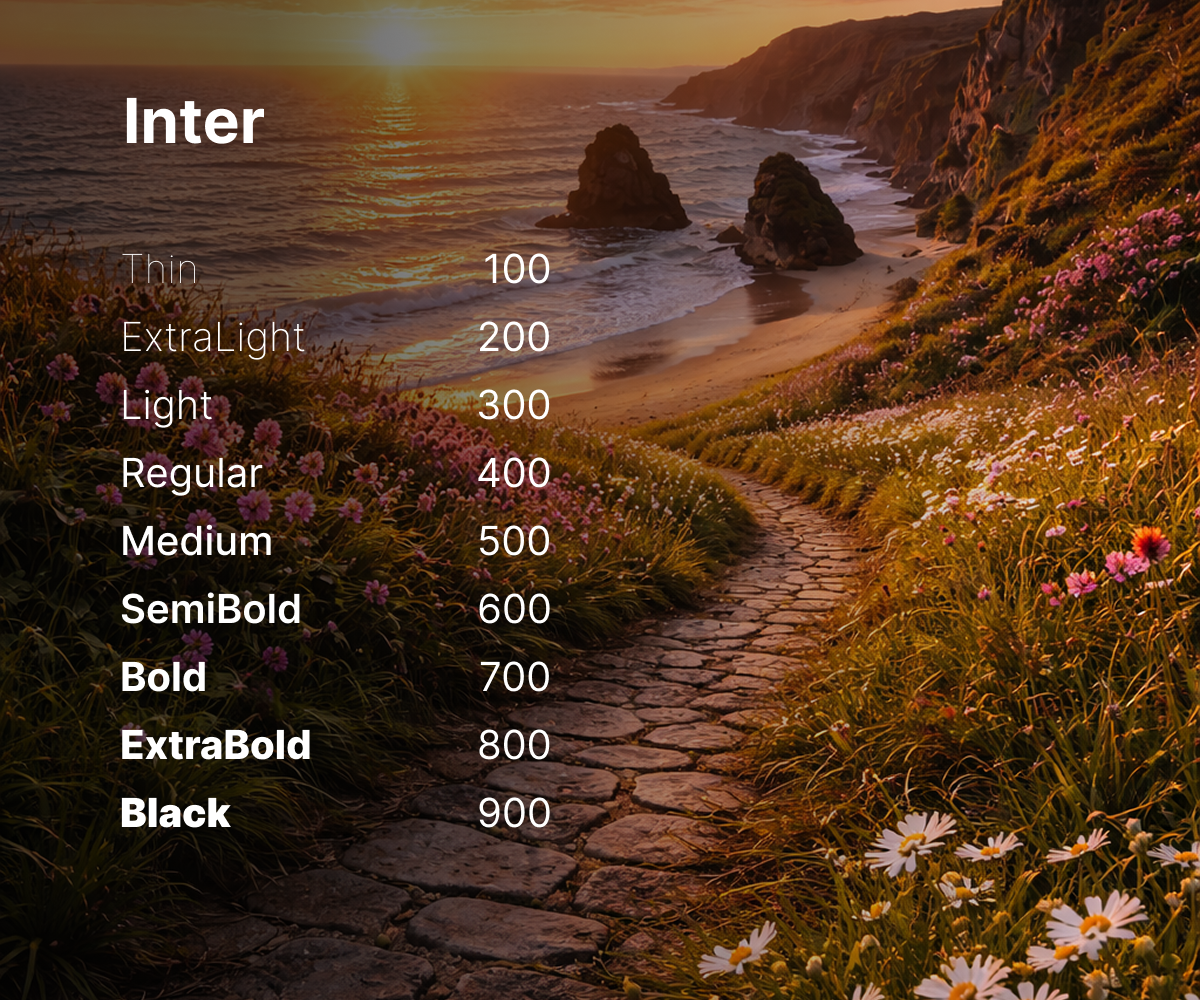
Best for: Product UI, dashboards, SaaS platforms
Inter is one of the most widely used UI fonts today, and for good reason. It was designed specifically for screens, with strong readability at small sizes and very predictable behavior across weights.
Why it works well:
- Clear, readable letterforms in dense UI
- Designed from the start for interfaces
- Broad language and symbol support
Good to know:
It’s very common. If visual differentiation matters, it often works best as a neutral base paired with a more expressive secondary font.
Official website: https://rsms.me/inter
License: SIL Open Font License
Source Sans 3
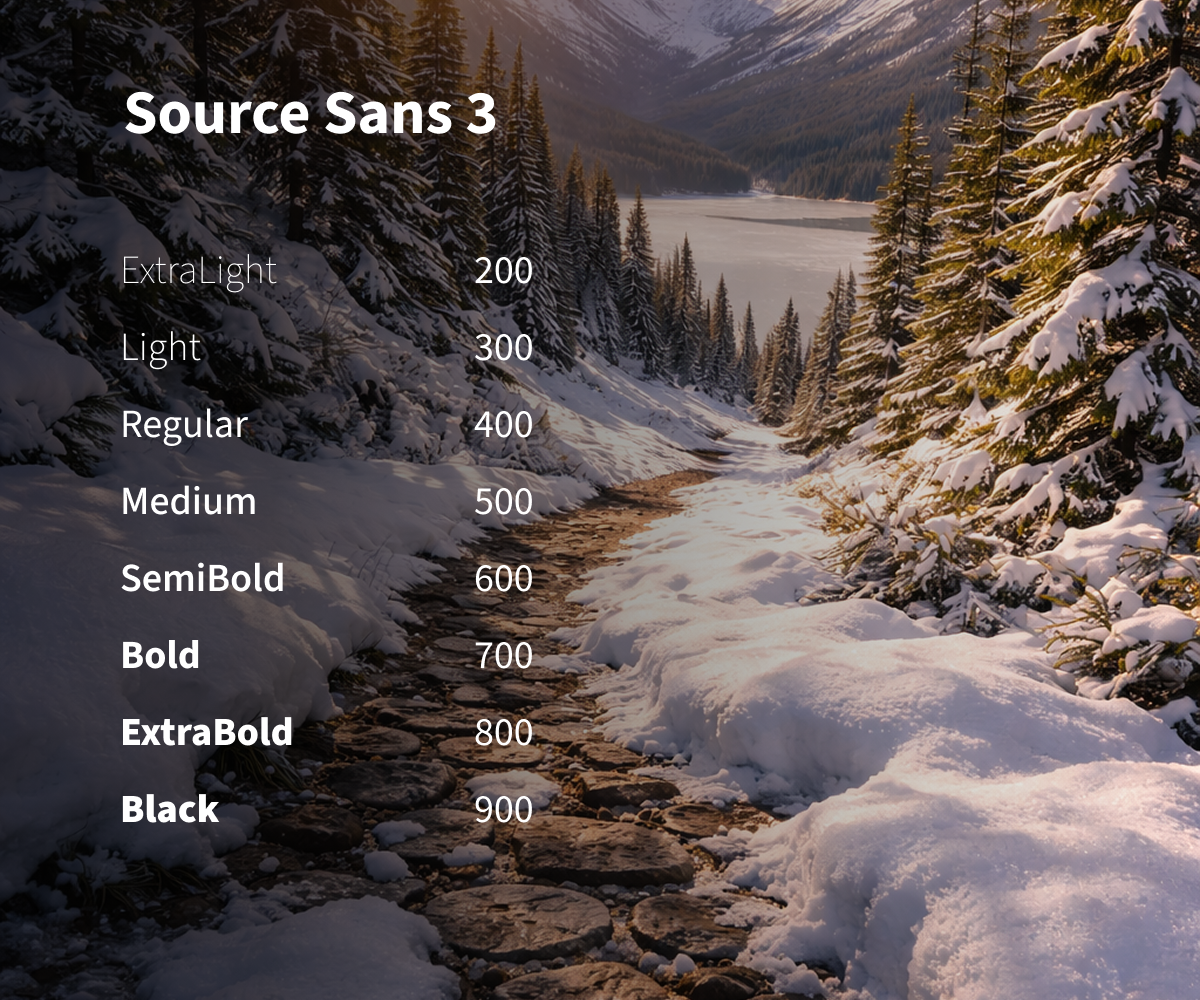
Best for: Content-heavy interfaces, text-driven products
Source Sans 3 is a refined evolution of a familiar typeface. The variable version feels calm, balanced, and easy to read over long sessions.
Why it works well:
- Professional, unobtrusive tone
- Excellent readability for long text
- Handles responsive layouts gracefully
Official website: https://adobe-fonts.github.io/source-sans/
License: SIL Open Font License
Roboto Flex
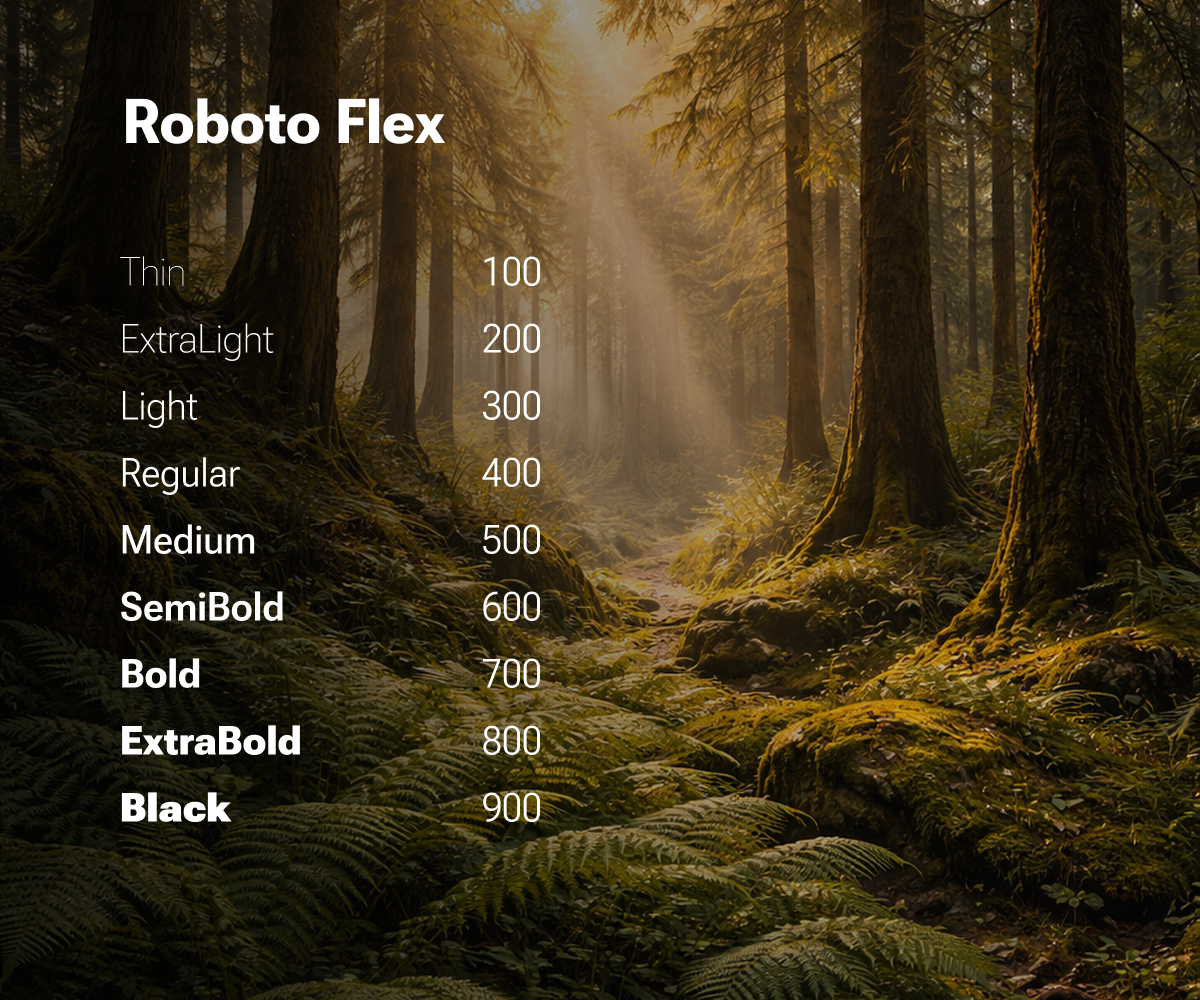
Best for: Advanced design systems, deep typographic control
Roboto Flex was built as a variable font from day one. It includes a wide range of axes and allows precise control over weight, width, and optical size.
Why it works well:
- Extremely flexible
- Ideal for token-based typography systems
- One file can replace an entire font family
Good to know:
It’s powerful, and easy to overuse. Best suited for teams that know how to define clear constraints.
Official website: https://fonts.google.com/specimen/Roboto+Flex
License: Apache License 2.0
Manrope
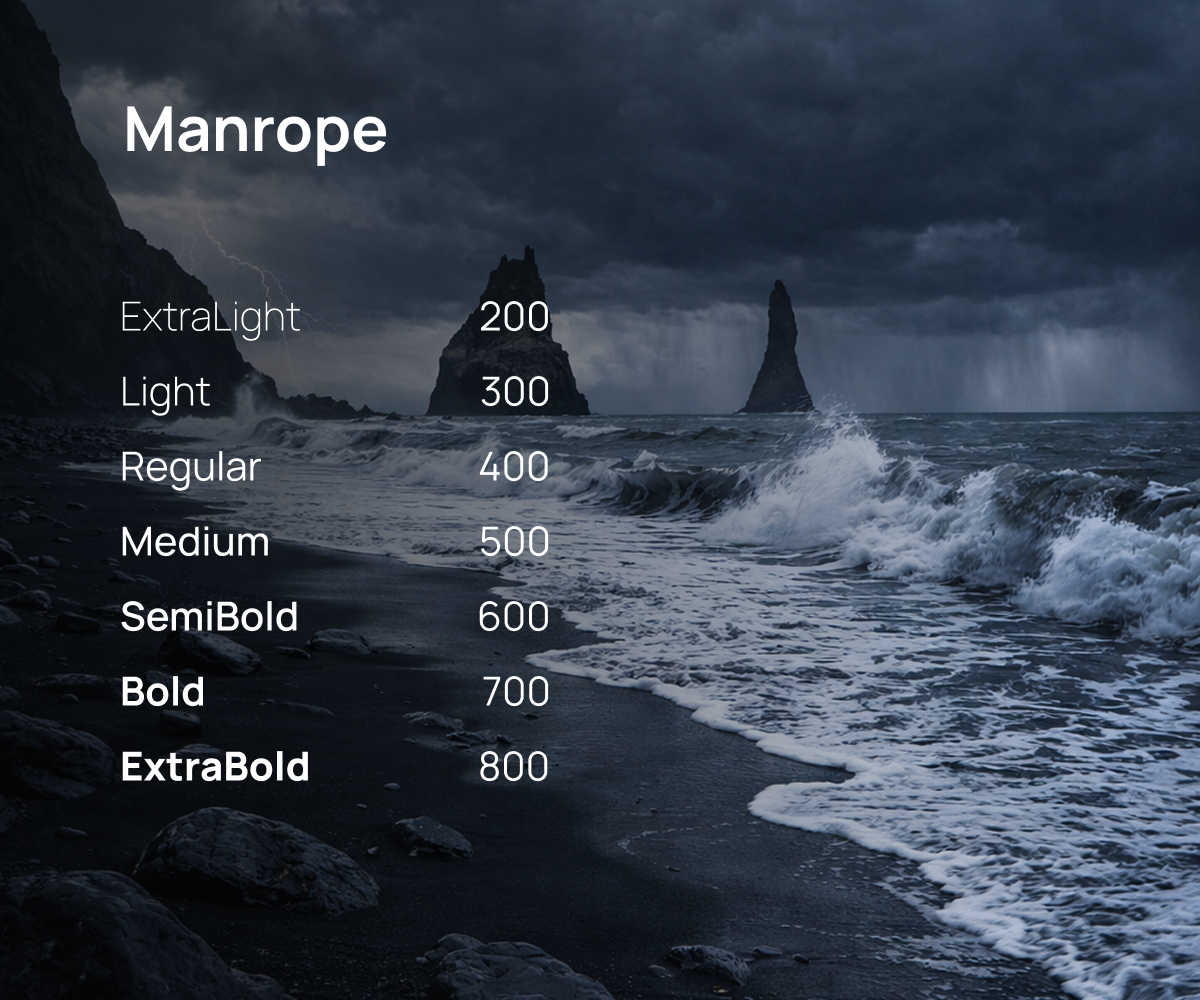
Best for: Modern interfaces, marketing sites
Manrope sits between functional and expressive. It feels contemporary and friendly without becoming distracting in UI contexts.
Why it works well:
- Clean, modern character
- Good contrast across weights
- Works well for approachable, product-led design
Official website: https://manropefont.com
License: SIL Open Font License
Space Grotesk
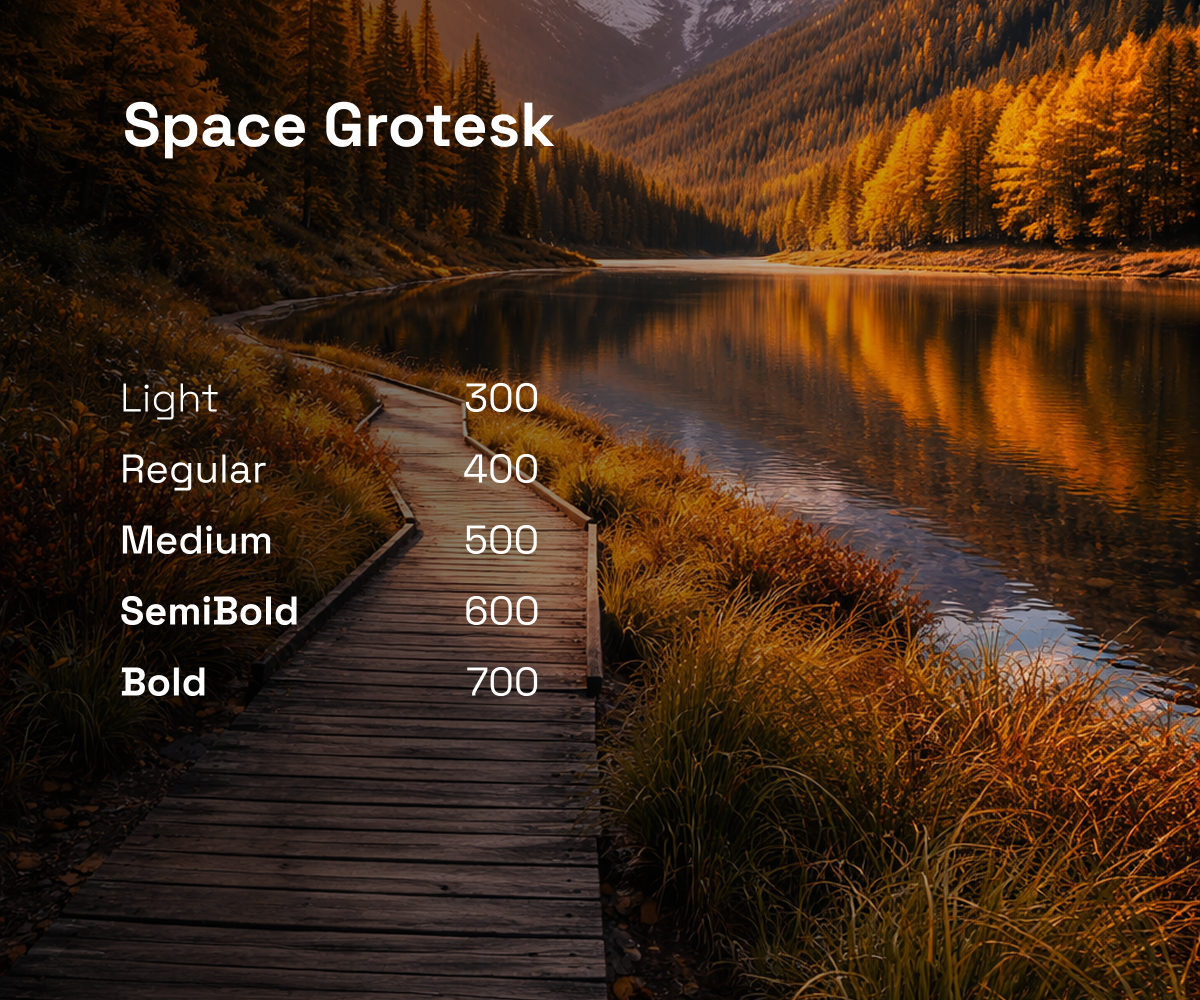
Best for: Creative products, brand-forward interfaces
Space Grotesk brings personality without sacrificing usability. It’s often used in products that want a distinctive feel without drifting into decoration.
Why it works well:
- Clear typographic voice
- Still readable in interface contexts
- Strong for headings and key UI elements
Official website: https://floriankarsten.github.io/space-grotesk/
License: SIL Open Font License
IBM Plex Sans Variable
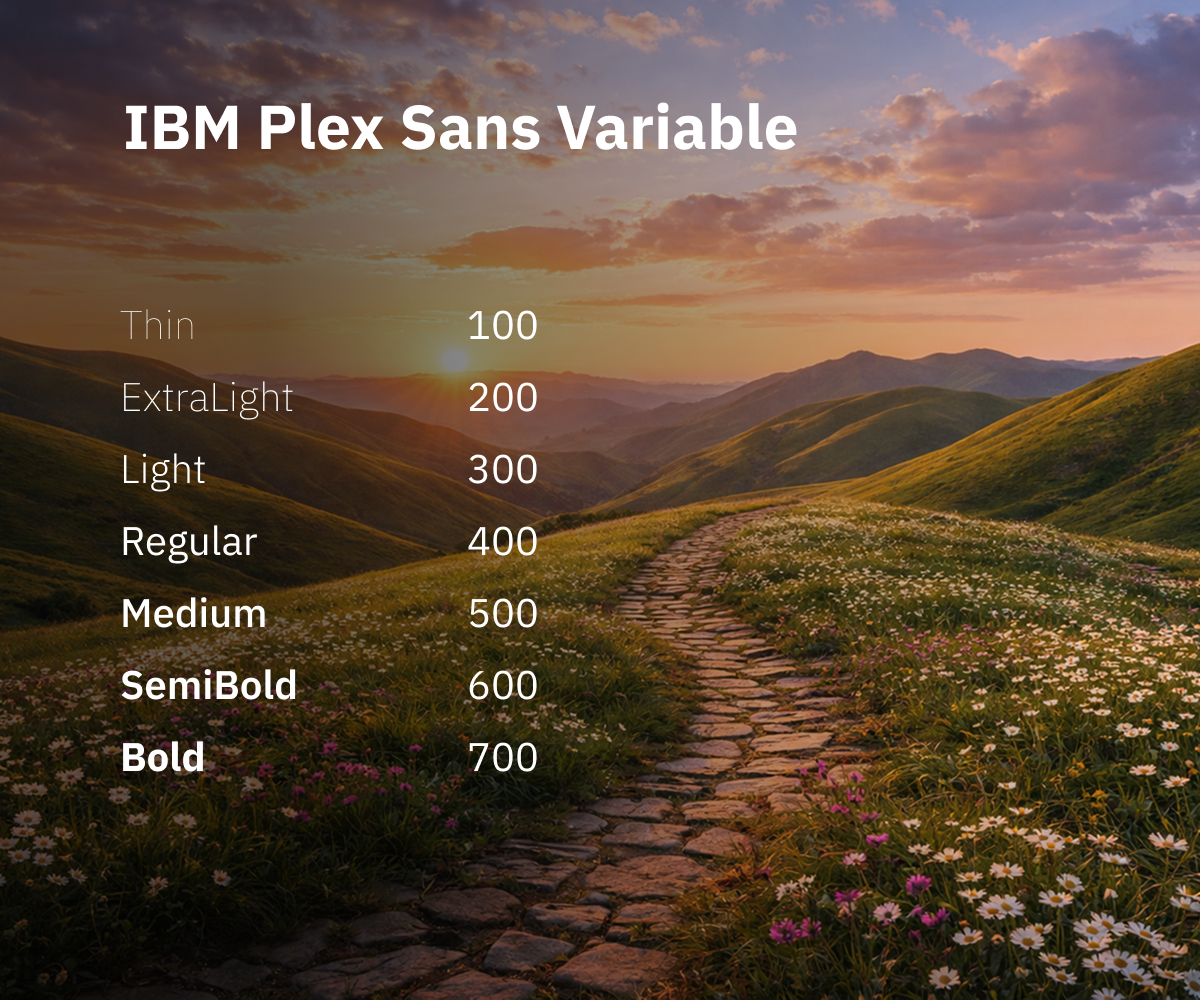
Best for: Complex products, enterprise tools
IBM Plex Sans was designed for information-heavy systems. It feels structured, reliable, and very clear even in crowded layouts.
Why it works well:
- Strong hierarchy across weights
- High readability in dense interfaces
- Excellent multilingual support
Official website: https://www.ibm.com/plex/
License: SIL Open Font License
How to choose the right variable font
A practical rule of thumb:
- Dashboards and SaaS: Inter, IBM Plex Sans
- Content-heavy products: Source Sans 3
- Creative interfaces: Space Grotesk, Manrope
- Advanced design systems: Roboto Flex
The goal isn’t variety.
It’s consistency you don’t have to think about.
Variable fonts won’t fix bad design.
But they remove friction from good design.
They simplify typography, reduce compromises, and give you control where UI work actually lives: in small decisions repeated hundreds of times.
By 2026, variable fonts aren’t a trend anymore.
They’re just part of doing UI work properly.
……
💡 Stay inspired every day with Muzli!
Follow us for a daily stream of design, creativity, and innovation.
Linkedin | Instagram | Twitter